
SINGAPORE INTEGRATED DEVELOPMENTS EXPLAINED: CONVENIENCE VS COST OF LIVING ABOVE THE MRT

In the Singapore property market, few residential concepts spark as much interest as integrated developments. The idea of stepping out of your home, taking an elevator down, and being instantly connected to an MRT station, a shopping mall, and daily essentials feels like the ultimate urban luxury. For many condo buyers, living above MRT infrastructure represents efficiency, status, and lifestyle convenience rolled into one address.
Yet integrated living also comes with higher prices, denser surroundings, and trade-offs that are often overlooked during the excitement of a new launch condo. As more buyers evaluate whether an MRT integrated condo Singapore project is truly worth the premium, the conversation has shifted from hype to practicality.
This guide breaks down how Singapore integrated development condos actually work, why they cost more, who benefits most, and when buying nearby, rather than directly above the MRT might make better sense.
What Makes an Integrated Development Different?
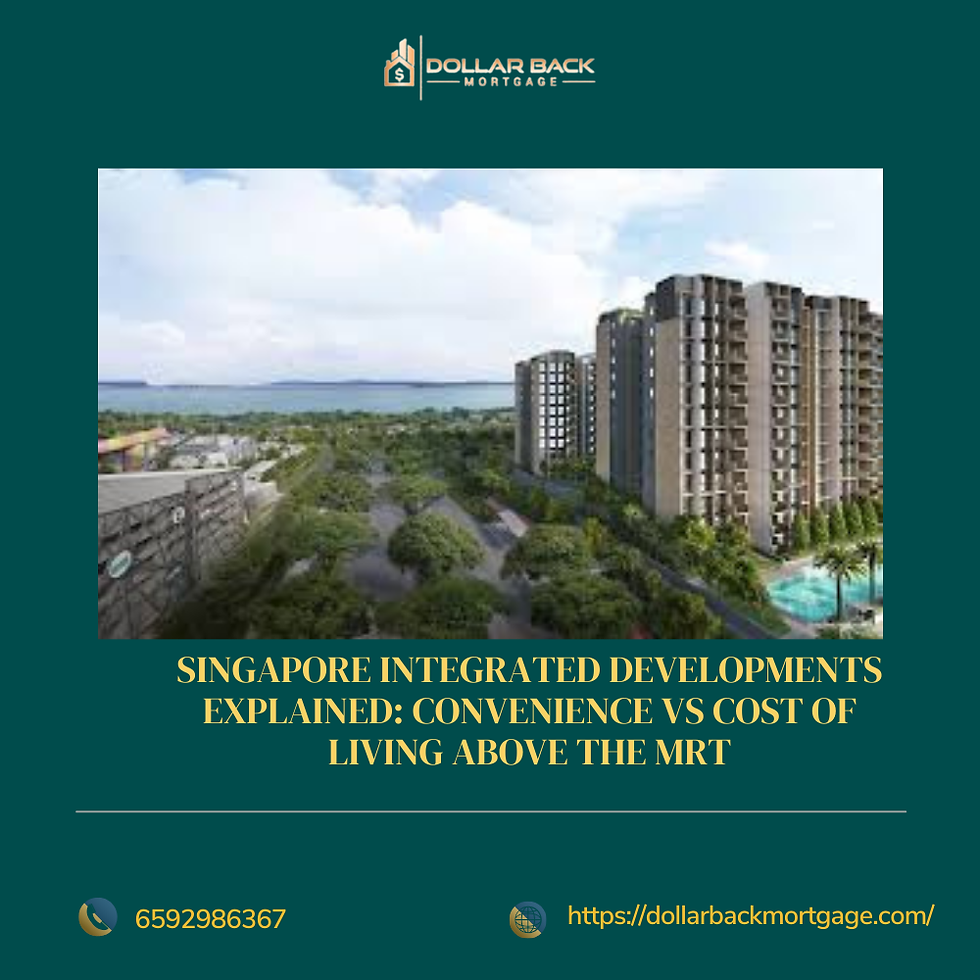
An integrated development is not simply a condominium with shops nearby. In Singapore, it refers to a master-planned project where residential units sit directly above or alongside a retail podium and are physically integrated with transport infrastructure such as an MRT station or bus interchange.
Many integrated mall condos in Singapore also include public or civic amenities like libraries, clinics, or community spaces. These developments are designed to function as self-contained lifestyle hubs rather than standalone residential towers.
While they operate like any other condominium, Singapore buyers are familiar with offering facilities, strata ownership, and management, they are often technically classified as apartments under planning rules. This distinction does not affect day-to-day living, but it explains why integrated developments are relatively rare and tightly controlled within the Singapore property landscape.
Why Integrated Developments Command a Premium
One of the first things condo buyers notice when comparing options is that integrated developments almost always launch at higher prices than surrounding projects. This is not accidental.
First, land parcels connected directly to MRT stations are extremely limited. Developers pay a significant premium for sites that allow direct transport integration, especially in mature estates or city-fringe locations.
Second, construction costs are higher. Building above transport nodes and commercial spaces requires more complex engineering, structural coordination, and long-term maintenance planning. These costs are built into the pricing of every new condo in Singapore integrated project.
Finally, demand plays a major role. The convenience of MRT condos appeals to both homeowners and investors, creating strong competition during launches. When demand is high and supply is limited, pricing pressure tends to move upward rather than stabilise.
The Everyday Benefits of Living Above MRT
The biggest appeal of Singapore integrated development condos lies in how they simplify daily routines.
For working professionals, the ability to commute without stepping outdoors during rain or heat changes how mornings feel. For families, having groceries, food options, enrichment centres, and basic services downstairs removes countless small logistical challenges.
Many residents living above MRT in Singapore transport hubs also find that they no longer need a car. This “car-lite” lifestyle reduces monthly expenses while maintaining mobility, especially for those working in the CBD or city-fringe areas.
Socially, integrated living often makes homes more accessible. Friends, relatives, and even elderly family members find it easier to visit when transport and amenities are seamlessly connected.
These benefits are not abstract, they show up daily in saved time, reduced stress, and smoother routines.
Where the Trade-Offs Begin to Appear
Despite the advantages, integrated living is not universally comfortable. One of the most common issues residents face is density.
Because integrated developments serve both residents and the public, peak-hour congestion is common. Car park queues, busy drop-off points, and crowded common areas can become part of everyday life, particularly on weekends.
Noise and activity levels also vary widely depending on stack selection. Units facing bus interchanges, main roads, outdoor dining areas, or mall rooftops may experience higher noise levels or lingering smells from F&B exhaust systems.
Navigation can be another frustration. With multiple lobbies, lift banks, and access routes, visitors and delivery services sometimes struggle to find the correct entrance. While these layered systems enhance security, they also add complexity.
For buyers who prioritise privacy, quiet, or a sense of exclusivity, these factors can outweigh the convenience.
Investment Perspective: Stability vs Yield
From an investment standpoint, MRT integrated condo Singapore projects are often viewed as “safer” assets, but safe does not always mean more profitable.
Integrated developments tend to rent easily. Tenants value direct MRT access, sheltered connectivity, and nearby amenities, which helps keep vacancy periods short even during slower market cycles.
However, rental yield percentages are often compressed. Because entry prices are higher, rental income may not scale proportionally. Investors focused purely on yield may find better numbers in nearby non-integrated condos purchased at lower prices.
Where integrated developments shine is capital resilience. Their scarcity, strong tenant demand, and enduring convenience help support long-term value, especially when owners eventually consider selling property in competitive markets.
The “Across-the-Road” Reality
One overlooked aspect of integrated developments is that neighbouring projects often enjoy many of the same benefits without the premium.
A condo located just across the street from an MRT integrated development still offers excellent connectivity, access to the same mall, and similar lifestyle convenience. Yet its purchase price may be meaningfully lower.
For some condo buyers, this balance offers the best of both worlds: convenience without density, and value without sacrificing accessibility. This is why comparing an integrated project only against itself is risky, surrounding stock matters.
Who Should Seriously Consider Integrated Living?
Integrated developments tend to work best for specific buyer profiles.
They suit individuals or families who prioritise time savings, commuting ease, and daily convenience over absolute quiet. Busy professionals, car-lite households, and families juggling work and school schedules often see the premium as worthwhile.
Investors seeking stable demand rather than maximum yield may also find comfort in integrated projects, especially in locations with long-term transport relevance.
On the other hand, buyers who value space, serenity, or privacy may feel overwhelmed by the activity that comes with living above MRT Singapore hubs. For them, nearby condos may provide a better lifestyle fit.
Making a Smarter Decision as a Buyer
Before committing to a new launch condo in an integrated development, buyers should look beyond the showflat appeal.
Key considerations include stack orientation, proximity to noisy infrastructure, lift-to-unit ratios, and car park access. These practical elements influence daily comfort far more than marketing brochures suggest.
Equally important is benchmarking. Compare the integrated project against nearby new condo offerings and resale options. Ask what you are truly paying for and whether you will fully use that convenience.
Final Thoughts
Singapore integrated development condos deliver undeniable convenience, but they are not a universal upgrade. Living above an MRT is a lifestyle choice with real trade-offs, not just a prestige label.
For some condo buyers, the time saved and mobility gained justify the premium completely. For others, living close, rather than directly above, offers a better balance of comfort, value, and long-term satisfaction.
In a mature Singapore property market, the smartest decisions come from understanding both sides of the equation: convenience versus cost.


Comments